
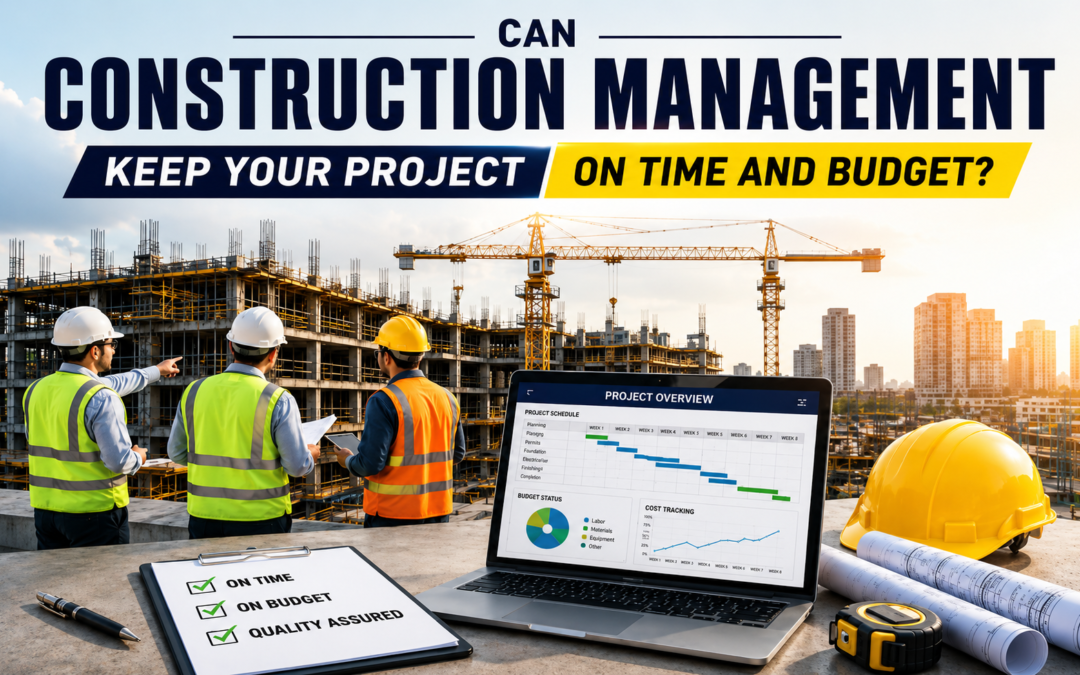
Summary: Keeping a construction project on time and within budget requires more than a good initial plan. This article explains how effective construction management uses cost forecasting, critical-path scheduling, procurement control, quality assurance, risk management, and trade coordination to prevent avoidable delays, reduce rework, protect budgets, and keep projects moving toward successful completion.
A construction project can begin with an approved scope, budget, and schedule, yet still lose control once work starts. Design revisions, long-lead materials, trade conflicts, and unforeseen site conditions can quickly affect cost and completion dates. Effective Construction Management Winnipeg brings planning, scheduling, cost control, procurement, quality assurance, and risk management together before small issues become expensive problems.
Establish Control Before Construction Starts
Strong project management begins during pre-construction, not when crews arrive on-site. The project team should review the scope, drawings, specifications, budget, schedule, procurement requirements, permits, and existing site conditions before work begins.
A constructability review can identify conflicts between the design and actual site conditions. For example, a new HVAC layout may conflict with structural elements or existing utilities above the ceiling. Finding that conflict during planning is far easier than discovering it after installation has started.
A detailed work breakdown structure can then divide the project into measurable activities. Each task has a sequence, responsible trade, expected duration, and relationship to other work.
This creates a baseline against which schedule and cost performance can be measured throughout construction.
Protect the Budget With Active Cost Control
Construction budgets rarely go off track because of one big mistake. Cost pressure often builds through smaller changes, scope gaps, material increases, delays, and additional labor.
Effective cost management requires more than comparing invoices with the original estimate. Project teams should monitor committed costs, actual costs, approved changes, pending changes, allowances, and cost-to-complete forecasts throughout the project.
Change orders require particular attention. Imagine a commercial tenant changes a room layout after electrical and HVAC rough-ins are complete. The revision may require new wiring, ductwork, framing, drywall, ceiling work, and finishes. The original change may appear small, but its impact can spread across several trades.
Reviewing the cost and schedule impact before approving the change gives you a clearer financial picture and helps prevent budget surprises.
Keep the Critical Path Moving
A construction schedule is more than a list of dates. It shows how different activities depend on one another.
Consider a simple sequence: framing must be completed before certain MEP rough-ins can proceed. Inspections may need to occur before walls are closed. Drywall finishing must then be completed before painting and final finishes can begin.
When one activity on the critical path falls behind, several following activities may also move. For a Construction Management Winnipeg project, this level of schedule coordination helps keep dependent activities aligned and gives the project team a clearer view of potential delays.
This is why construction teams use tools such as look-ahead schedules, milestone tracking, schedule updates, and trade coordination meetings. A look-ahead schedule can identify upcoming work and constraints before they affect the broader project timeline.
The objective is not simply to report that a project is late. It is to identify why the delay is developing and address it while there is still time to recover.
Coordinate Procurement With Construction Sequencing
Materials need to arrive when the project is ready for them. Too early, and they create storage and handling problems. Too late, and crews may be left waiting.
This becomes especially important for long-lead items such as specialized mechanical equipment, electrical gear, doors, glazing systems, custom millwork, and certain finish materials.
Procurement should therefore be connected directly to the construction schedule. Submittals, shop drawings, approvals, fabrication, shipping, and delivery all need to be considered.
For example, if a custom electrical component requires several weeks for fabrication, waiting until installation is approaching can put the entire activity at risk. Early procurement planning provides more time to address supplier delays or approved alternatives.
Good coordination keeps materials, labor, and site readiness moving together.
Use Quality Control to Prevent Expensive Rework
Schedule and budget control mean little if defective work has to be removed and rebuilt. Quality management should happen throughout construction, not just during the final walkthrough.
This can include submittal reviews, shop drawing coordination, RFIs, site inspections, deficiency tracking, and milestone reviews.
Suppose a mechanical installation does not match the approved drawings. If the issue is identified before the ceiling is closed, correction may be straightforward. If it is discovered during final inspection, fixing it could involve demolition, additional labor, replacement materials, and schedule disruption.
This is where Construction Management Services provide value. Consistent oversight connects schedule control, quality assurance, documentation, and communication throughout the project.
A detailed punch list near project completion also helps identify outstanding items before final handover, while closeout documentation ensures the owner receives important project records.
Manage Risk Before It Becomes a Delay
Every construction project carries uncertainty. Weather, permit approvals, labor availability, material shortages, design revisions, hidden conditions, and utility conflicts can all affect delivery.
A practical risk register helps track these issues by identifying the risk, potential impact, responsible party, and planned mitigation.
For example, if a project depends on a long-lead HVAC unit, the risk should be identified before the equipment becomes critical to the schedule. The team can monitor procurement, confirm manufacturing dates, and evaluate alternatives if a delay develops.
This proactive approach is far more effective than waiting for the problem to reach the jobsite.
Bring Every Moving Part Under One Plan
Construction management works best when cost, schedule, quality, procurement, and risk are treated as connected parts of the same project.
At Iris Construction Management Inc., we focus on maintaining that connection throughout the construction process. Our approach emphasizes detailed planning, clear communication, trade coordination, and proactive issue management so project decisions are based on current information rather than guesswork.
Ready to Bring More Control to Your Construction Project?
Connect with Iris Construction Management Inc. to discuss your project requirements and develop a practical management approach built around your schedule, budget, and construction goals.
Final Thoughts
Construction projects rarely follow the original plan perfectly. Materials change, site conditions emerge, designs are revised, and schedules shift. Strong construction management provides the structure needed to respond without losing sight of the project’s core objectives.
By combining pre-construction planning, cost forecasting, critical-path scheduling, procurement control, quality management, and proactive risk mitigation, you can reduce avoidable delays and protect your investment.
The goal is not to pretend that construction risks do not exist. It is toidentify them early, manage them intelligently, and keep the project moving toward successful completion.
FAQs
1. What does construction management include?
Construction management covers planning, scheduling, budgeting, procurement, subcontractor coordination, quality control, risk management, documentation, and project closeout.
2. How can construction management prevent budget overruns?
Regular cost tracking, change-order reviews, procurement planning, and cost-to-complete forecasting help identify financial risks before they become major budget problems.
3. What is a critical path in construction?
The critical path identifies activities that directly affect the project completion date. Delays in these activities can push back several following tasks.
4. Why are long-lead materials important to construction scheduling?
Long-lead materials can take weeks or months to arrive. Early procurement helps prevent material shortages from delaying installation and other dependent construction activities.
5. How does risk management improve construction projects?
Risk management identifies potential problems early, evaluates their impact, assigns responsibility, and establishes mitigation plans to reduce delays, rework, and unexpected costs.