
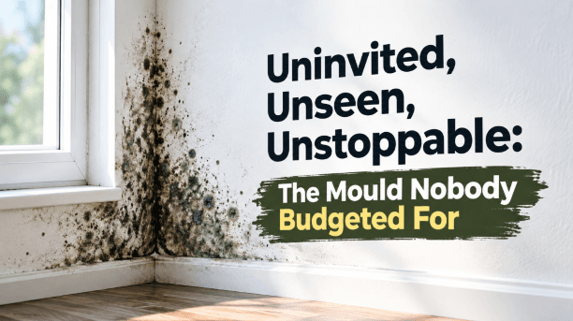
Summary: Mould can develop quietly behind walls, flooring, and HVAC components when moisture problems go unnoticed. This blog explains why commercial mould remediation requires more than surface cleaning, covering moisture investigation, containment, HEPA filtration, material removal, verification, and project coordination. It also highlights how professional remediation can integrate with renovation and construction schedules.
Mould doesn’t send a warning. It doesn’t wait for a slow month, a finished lease renewal, or a convenient gap in your renovation schedule. It moves in quietly behind drywall, under flooring, and around HVAC components. By the time it’s visible, the moisture problem may already be established. For Winnipeg property owners and facility managers, that’s exactly why finding the right Mould Remediation Contractors Winnipeg Mb early, rather than after a tenant complaint or a failed inspection, can be an important risk-management decision.
The Moisture Trail: How Mould Actually Gets Its Foothold
Every mould problem starts with moisture. In commercial buildings, that moisture usually traces back to one of a handful of sources. These can include a compromised building envelope, condensation around poorly insulated ductwork, a slow plumbing leak inside a wall cavity, or humidity that has nowhere to escape in a tightly sealed space.
Older Winnipeg buildings bring their own risk profile, with aging vapour barriers and mechanical systems that may not have been designed for today’s occupancy loads. Newer builds aren’t immune either. A missed flashing detail during construction can create a moisture pathway that takes months to reveal itself.
This is why an experienced remediation team doesn’t start with a scraper and a fogger. It starts with moisture mapping and source investigation. The goal is to identify exactly where water is entering or accumulating. Removing visible mould without correcting the source is only a temporary fix.
Why Commercial Remediation Isn’t a DIY-Adjacent Job
Residential mould removal and commercial remediation operate under different pressures. A homeowner can often close off a room for a weekend. A restaurant, medical clinic, or retail tenant usually can’t close at all.
That changes the entire approach. Containment barriers have to be built around active work zones. Negative air pressure may be used to help control airflow from the affected area. HEPA-filtered air equipment can also help manage airborne particles during remediation.
Crews must sequence their work around staff schedules, patient flow, customer hours, and building access. This is where choosing Mould Remediation Contractors Winnipeg Mb actually matters. A contractor experienced mainly in residential jobs may not have the containment protocols, equipment, or scheduling flexibility that a live commercial environment demands.
What Professional-Grade Remediation Actually Looks Like
A properly managed remediation project follows a structured process, not a one-visit cleanup. That typically includes:
- Assessment and moisture mapping to locate the source, not just the symptom
- Containment setup to isolate the affected area and control airflow
- HEPA-filtered air scrubbing to help manage airborne particles during removal
- Removal of affected materials that cannot be appropriately cleaned or salvaged
- Post-remediation verification to assess whether the defined remediation objectives have been met
A Professional Mould Remediation Company Winnipeg approaches these stages as one coordinated process, with documentation throughout the project. That documentation can be valuable beyond the remediation itself. Insurers, landlords, property managers, and other stakeholders may need a clear record of what was identified, addressed, and verified.
Industry protocols such as the IICRC S520 provide a framework for professional mould remediation practices, including assessment, containment, remediation, and verification. Following an established process helps ensure the work is managed systematically rather than focusing only on visible growth.
When Mould Becomes Part of a Bigger Build
Mould is rarely discovered in isolation. It can surface during a renovation, pre-lease inspection, or tenant improvement project, right when a schedule is already tight. When that happens, bringing in a separate remediation company can mean another contractor, another timeline, and additional coordination challenges.
At Iris Construction Management, remediation isn’t treated as an outside interruption to a project. Because our team already manages design, budgeting, and construction under one accountable structure, mould remediation can be coordinated with the existing project schedule. This creates one point of contact and a clearer sequence of work.
If you suspect a moisture or mould issue in your commercial space, or you’re planning a renovation where it could become a factor, talk to Iris Construction Management before the problem grows further.
Ready to address a mould issue before it disrupts your project? Click here to connect with Iris Construction Management and share your project requirements.
Frequently Asked Questions
1. How do I know if my commercial space has a mould problem before it’s visible?
Musty odours, unexplained humidity, discoloured ceiling tiles, or recurring HVAC condensation can be warning signs worth investigating before mould becomes visible.
2. Is commercial mould remediation different from residential remediation?
Yes. Commercial remediation has to account for occupied spaces, staff or customer flow, building access, and containment requirements that help keep unaffected areas separated from the work zone.
3. Can mould come back after remediation?
It can if the underlying moisture source isn’t identified and corrected. That’s why moisture mapping and source investigation are important parts of the remediation process.
4. How long does commercial mould remediation typically take?
Timelines vary with the extent of the affected area, materials involved, and project conditions. Some projects take a few days, while larger or phased commercial work can take longer.
5. Should mould remediation be handled separately from a renovation project?
Not necessarily. When remediation is coordinated with an ongoing renovation or tenant improvement, the work can often be integrated into the broader project schedule and sequencing.